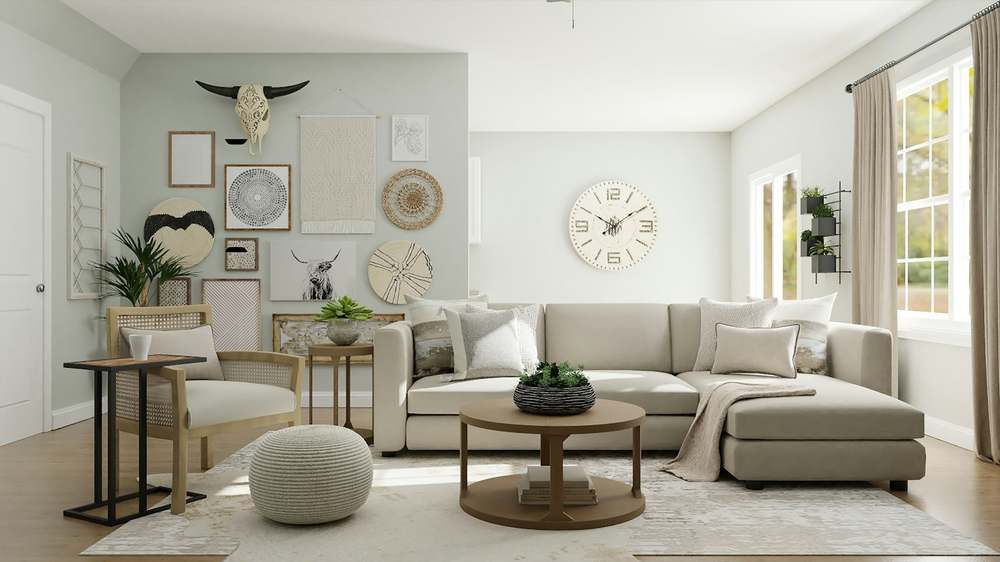
The entryway is the smallest room in most flats and the one that decides whether everything else stays organised.
The reason is mechanical rather than psychological. Whatever you are carrying when you walk in — keys, bag, post, coat, shoes — must land somewhere within about three steps of the door. If there is no designated place within that radius, it lands on the floor or the nearest flat surface. Once one thing is on the floor, the entryway becomes a dumping ground, and the dumping spreads.
Four square metres, done properly, prevents most of the clutter in the rest of the flat.
Measure the actual constraints first
Before buying anything, measure these five things. Every entryway problem is one of them.
| Measure | Typical | Why it decides the solution |
|---|---|---|
| Width of the entry zone | 90–140 cm | Determines whether you can fit a bench or only a wall-mounted option |
| Depth available | 20–40 cm | Under 25 cm rules out most shoe cabinets |
| Distance from door to first wall | 30–120 cm | The "three steps" radius: anything further will not get used |
| Door swing | 76–90 cm | Eliminates options immediately if the zone is small |
| Skirting height | 10–20 cm | Freestanding units need clearance at the base |
Most entryways in small flats are 90–120 cm wide with about 30 cm of usable depth — enough for a shallow bench or a narrow shoe rack, not enough for a proper hall unit.
The four functions, in priority order
An entryway needs to handle four things. Order matters because most people solve the wrong one first.
1. Shoes (the biggest volume)
Shoes are the largest problem by volume. A household of two has 8–15 pairs in active rotation, and pairs are awkward shapes that do not stack.
Best solution for under 30 cm depth: an angled shoe rack, two or three tiers. Holds 9–12 pairs in a footprint of 60 × 28 cm.
Best solution for under 20 cm depth: a vertical shoe rack or over-door shoe pockets. Holds 8–10 pairs in almost no floor space, at the cost of being slightly awkward to use.
Avoid: flat shoe cabinets with doors that open downward. They look neat and hold 6 pairs badly, because the interior is a single compartment where shoes pile on top of each other.
The daily-pair rule: the two pairs you wear most should not be in a rack at all. They should be on a tray or mat by the door, where you can step into them without opening anything. Everything else goes into the rack. This single distinction removes most of the friction.
2. Coats and bags
Best solution: a wall-mounted hook rail at 170 cm, or an over-door rack if there is a door within reach.
Capacity: 4–6 hooks handles a typical household's daily outerwear. A hook rail with a shelf above it adds storage for hats, gloves and a bag.
The wet-coat problem: in winter, wet coats on a hook drip onto whatever is below. If the hook rail is above a shoe rack, the shoes get wet. Either put the hooks above a hard floor area, or add a small tray beneath.
What not to use: a coat stand in a narrow entryway. They tip, they occupy the floor where you need to stand, and in a 100 cm wide entryway they are actively obstructive.
3. Keys, post and small items
This is the function people forget, and it is the one that produces the visible mess.
Best solution: a single tray or shallow bowl on whatever surface exists, plus a hook for keys.
The tray is important because it contains the mess rather than eliminating it. Fighting the human habit of dropping keys on the nearest surface is a losing battle; giving that habit a defined boundary works.
Size: 20 × 15 cm is enough for keys, a wallet, and the day's post. Larger trays become clutter magnets.
4. A place to sit
This is the optional function, and in small entryways it is usually the one that gets cut. Putting on shoes while standing on one leg is a daily indignity that a 60 cm bench solves.
Best solution if there is room: a low bench 40–45 cm high, with storage underneath (baskets or a shelf).
Best solution if there is no room: a folding stool that hangs on a hook when not in use, or a bench that also functions as the shoe rack.
The layout that works in 100 cm
For a 100 cm wide entry zone with 35 cm of depth and a door that swings inward:
  ┌──────────────────────────┐
  │  [hook rail at 170cm]    │  ← coats, bags
  │                          │
  │  ┌────────────────────┐  │
  │  │ shelf at 120cm     │  │  ← hats, gloves, bag
  │  └────────────────────┘  │
  │  ┌────────────────────┐  │
  │  │ bench 60cm wide    │  │  ← sit + baskets below
  │  │  (baskets under)   │  │
  │  └────────────────────┘  │
  │  ┌───────┐               │
  │  │tray   │  [shoe rack]  │
  │  └───────┘               │
  └──────────────────────────┘
        door swing →  cleared
The key constraint: nothing may sit inside the door swing. In a 100 cm entryway with a 76 cm door, that leaves about 24 cm of clear wall — enough for a shallow rack but not for a bench.
If the door swings inward and there is genuinely no space, the bench moves to the adjacent room, and the entryway holds only hooks, a rack, and a tray.
What this costs
| Item | Cost |
|---|---|
| Angled shoe rack (2 tier) | $20–35 |
| Hook rail with shelf | $20–40 |
| Tray or bowl for keys | $8–15 |
| Folding stool or bench | $25–50 |
| Total | $73–140 |
All freestanding or adhesive-mounted, all removable.
The three-step test
After setting up, test it honestly: walk in the door carrying a bag, a coat and your keys, and see whether everything has a place within three steps.
If it does, the entryway works and will stay clear. If it does not, the setup will decay within a fortnight, no matter how neat it looked on day one.
Common failures at this test:
- The shoe rack is around a corner (more than three steps, so shoes come off at the door and stay there)
- The hooks are behind the door (so the coat goes on the nearest chair)
- The tray is on a surface that is too high to reach while holding things
Each of these is a placement problem, not a storage problem, and each is fixed by moving something rather than buying something.
Keeping it clear
Two habits keep an entryway working.
The floor is not storage. Nothing is stored on the floor except the two daily pairs of shoes on their tray. If something is on the floor, it needs a place, or it needs to leave the house.
Weekly sweep. Once a week, take everything off the tray and hooks and put back only what belongs. Post gets dealt with, receipts get binned, and the accumulated items that arrived during the week are sorted.
That is five minutes a week, and it is the difference between an entryway that works and one that gradually becomes a pile.
If you have no entryway at all
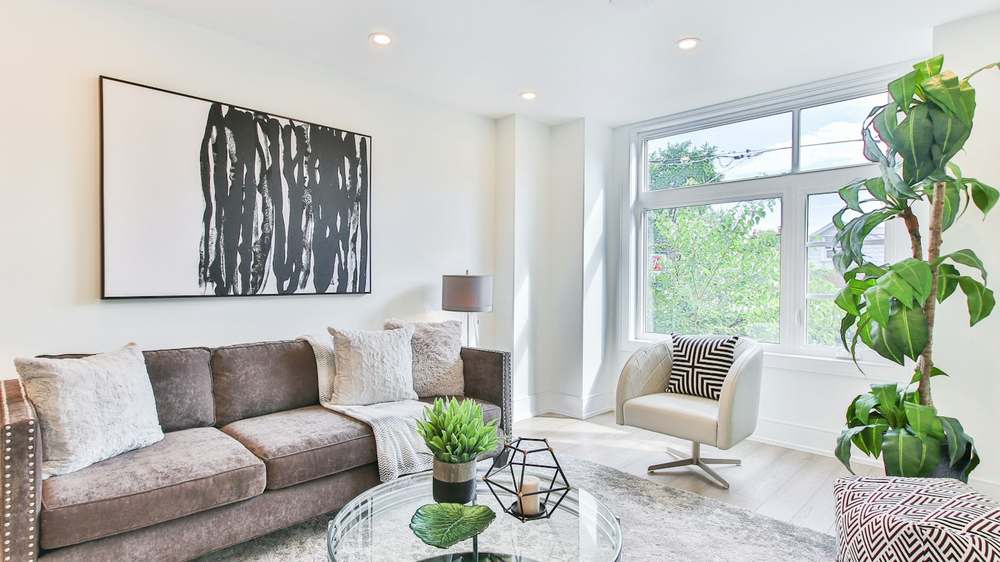
Some flats open directly into a living room with no transitional space. In that case:
- Put a narrow console table immediately inside the door, with a tray on top and baskets underneath
- Mount hooks on the back of the front door itself
- Accept that shoes live in a rack beside the console, and buy one that looks intentional rather than utilitarian
The principle is the same: define the first three steps and put everything there. Without an entryway, you have to create one with furniture, but the radius is identical.
The honest summary
The entryway problem is almost never about lacking space. It is about the walking route from the door to the first available surface being longer than three steps, or that surface being unsuitable.
Fix the placement and the clutter stops. Buy more storage and it will fill up too, because the underlying problem — nothing within reach — has not changed.