
Most people move into a small flat and spend the first month living around boxes, then the next eleven months meaning to deal with them.
The first week is the only time you will have the energy, the empty rooms, and the motivation to set things up properly. After that, the flat settles into whatever arrangement happened by accident.
This is a day-by-day plan for that week, designed for flats under 60 m².
Before the move: two things to do
Measure the new flat before you pack
If you can get access before moving day, measure these and photograph them:
- Every room's width and length at floor level
- Doorway widths (for furniture and boxes)
- Wardrobe and cupboard internal dimensions
- Window sill depths and radiator positions
- Where the power outlets are
This prevents the most common moving-day disaster: a piece of furniture that does not fit through the door or into the room.
Label boxes by destination room, not by contents
"Kitchen", "Bedroom", "Bathroom" on the side facing out. Not "misc", not "stuff", not by contents alone.
The reason: on moving day you are carrying boxes, not reading labels. A box marked "Kitchen" goes to the kitchen without a decision. A box marked "Misc" goes to the middle of the living room "for now" and stays there.

Day 1: essentials only
Do not try to unpack on moving day. Do this instead.
Set up the bed and bedding. Before anything else. You need somewhere to sleep, and making the bed at 11pm after a day of moving is miserable.
Set up the bathroom. Toiletries, towels, toilet paper, a shower curtain if needed.
Set up one kitchen corner. Kettle, mugs, one pan, one plate per person, cutlery. Not the whole kitchen — one corner that lets you make tea and a simple meal.
Put all other boxes against one wall, in the room they belong to. Not spread out, not "to sort later" in the middle of the floor. One wall, stacked.
That is day one. Four things, and you can live in the flat that night.
Day 2: the kitchen
The kitchen is the highest-value room to unpack properly, because it is where the arrangement either works or becomes a daily annoyance.
Do this in order:
- Empty every box onto the counter and table
- Measure the cabinets — internal width, depth, and the dead zone at the back
- Sort into daily / weekly / occasional piles
- Put daily items in the middle zone (25–50 cm from the floor)
- Put occasional items in the top or bottom zone
- Anything that does not fit goes into one box labelled "kitchen overflow" — and that box goes to a cupboard outside the kitchen, not on the counter
The critical rule: do not buy containers on day two. Wait until day four, when you know what is left over.
Time: 3–4 hours including washing the cupboards out.
Day 3: bedroom and wardrobe
Bedroom first, because it determines how well you sleep in the first week.
- Assemble the bed properly (do not leave it on the floor "for now")
- Set up the wardrobe or rail
- Count your clothing, roughly — even a rough count helps
- Hang the items you wear weekly; fold the rest
- Put all out-of-season items into bags or boxes for storage, and stack them somewhere out of the way
The decision to make on day three: where out-of-season clothing lives. If there is no wardrobe, this is the day to decide whether it goes under the bed, in a suitcase, or in a box on top of the wardrobe.
Leaving this undecided is what produces the "clothes everywhere" phase that lasts three months.
Day 4: bathroom, and the container decision
Bathroom in the morning. Empty all boxes, group by frequency, allocate the four zones (beside sink, in shower, above toilet, back of door). Anything used less than monthly goes into a box that lives outside the bathroom.
Container shopping in the afternoon. Now you know what is left over, and only now can you buy correctly.
Take measurements with you:
- Cabinet internal width and depth
- Shelf heights
- The under-bed clearance (measure it in the middle)
- The gap beside the fridge, if there is one
Budget expectation: $80–150 for a small flat, and it is entirely possible that the answer is under $50 if the cupboards are reasonable.
Day 5: living space and the "nowhere" box
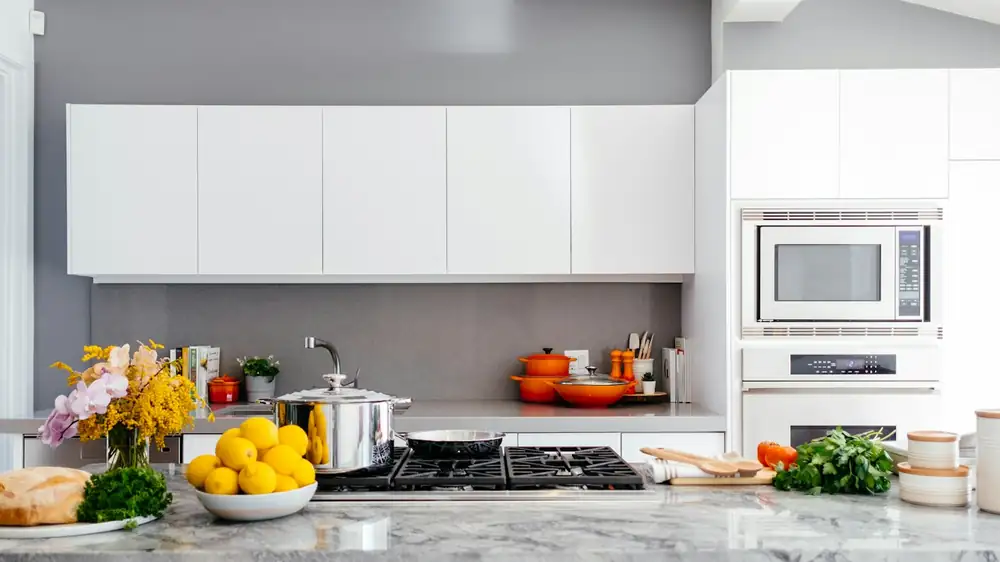
The living room is usually last and usually the room with the most random items, because it absorbs everything that did not have a home.
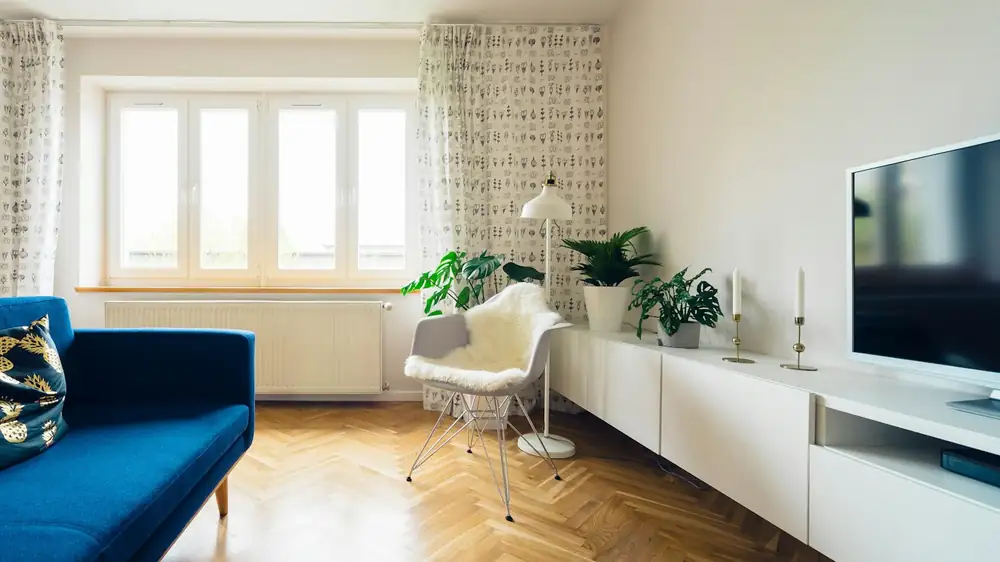
Set up the furniture first — sofa, table, and any shelving. Position before you unpack, because moving furniture after it is loaded is much harder.
Then unpack, with one rule: anything that does not have an obvious home goes into a single box labelled "nowhere".
The "nowhere" box is the most useful part of this plan. Instead of leaving twelve small items scattered across the flat because each one lacks a home, you put them all in one box and deal with them once, at the end.
At the end of day five, look inside the "nowhere" box and make a decision for each item: find it a home, store it elsewhere, or discard it. This takes about thirty minutes and prevents three months of small-item clutter.
Day 6: the entryway and the floor
Entryway. Hooks, a tray for keys, a shoe rack if there is room. This is a small job with a large effect, because the entryway sets the tone for the whole flat.
Then walk the floor path from door to bed and make sure nothing is in the way. Boxes go out (to recycling), furniture goes where it belongs, and anything still in the middle gets a place or leaves.
This is also the day to break down all empty boxes. Do not keep them "in case we move again" unless you have somewhere to store them flat. Empty boxes stacked in a corner are the most common symbol of a move that never finished.
Day 7: the first reset
Do nothing new. Instead, run the twenty-minute evening reset, and then again the next day.
The point of day seven is to establish the maintenance habit while the flat is still in the state you set up. If you wait until it has drifted, the routine feels like a chore rather than a confirmation.
The three failure modes of moving week
Failure one: unpacking by box rather than by room
Opening boxes in the order they arrive means you unpack the kitchen, then the bedroom, then the kitchen again. Choose a room per day instead.
Failure two: keeping the "to sort later" pile
A pile in the corner labelled "to sort" will still be there in a year. Every item needs a decision within the first week, even if the decision is "store it elsewhere".
Failure three: buying furniture before measuring
The sofa that does not fit through the door, the wardrobe that is 2 cm too wide, the desk that blocks the window. All of these are prevented by ten minutes with a tape measure before you shop.
A realistic budget for the first week
| Item | Cost |
|---|---|
| Storage containers (measured, not guessed) | $50–150 |
| Entryway hooks and tray | $25–45 |
| Basic tools (tape measure, screwdriver, shelf pins) | $25–40 |
| Cleaning supplies | $25–40 |
| Total | $125–275 |
Notice what is not on the list: new furniture. In the first week, the priority is making the space you have work, not adding to it. Furniture decisions should wait until you have lived in the flat for a month and know what is actually missing.
The one-week checklist
BEFORE MOVING
[ ] Measured the new flat (rooms, doors, cupboards)
[ ] Boxes labelled by destination room

DAY 1  [ ] Bed  [ ] Bathroom  [ ] One kitchen corner  [ ] Boxes on one wall
DAY 2  [ ] Kitchen unpacked and measured, overflow boxed
DAY 3  [ ] Bedroom set up, out-of-season stored
DAY 4  [ ] Bathroom done  [ ] Containers bought (with measurements)
DAY 5  [ ] Furniture positioned  [ ] "Nowhere" box resolved
DAY 6  [ ] Entryway done  [ ] Floor clear  [ ] Boxes broken down
DAY 7  [ ] First 20-minute reset
Seven days, roughly four hours of work per day, and the flat is functional. Compare that with the alternative: six months of living around boxes and never quite settling in.
The first week is the whole opportunity. Use it.