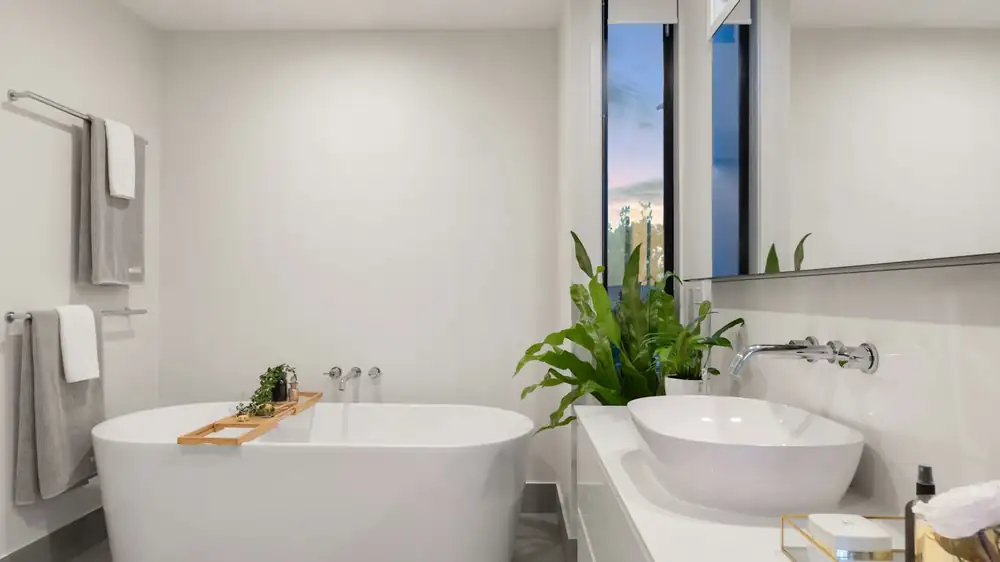
A bathroom of 2 square metres sounds like it cannot hold anything. In practice it has more usable storage surface than most people use, because the walls are entirely empty.
The problem is not capacity. It is that people put things on the floor and the counter, which are the two smallest surfaces in the room, and ignore the walls, which are the largest.
This is the arithmetic of a genuinely small bathroom, and what to do with each part of it.
The actual numbers
For a bathroom of 1.2 × 1.7 m (2.04 m²):
| Surface | Area | Usable for storage? |
|---|---|---|
| Floor | 2.04 m² | No — you need to stand there |
| Counter (basin unit) | 0.3 m² | Some — but it must stay clear to use |
| Walls | ~5.8 m² gross | Yes — 3 m² after doors and windows |
| Above the toilet | 0.3 m² footprint | Yes — 60+ cm of height |
| Back of the door | 1.5 m² | Yes — rarely used |
The walls and the dead space above the toilet add up to more than four times the floor area. That is where the storage is.
The counter: keep it under five items
The counter around a small basin is typically 50 × 40 cm, of which maybe 30 × 20 cm is actually free after the tap.
The rule: five items maximum, and they are the ones you touch twice a day.
Typical five: toothbrush (in a holder), toothpaste, soap or dispenser, face wash, one moisturiser.
Everything else — the second moisturiser, the serum, the comb, the hair products — moves off the counter. Not because they are unimportant, but because a cluttered counter makes the whole room feel dirty even when it is clean.
Beside the basin: the shallow shelf
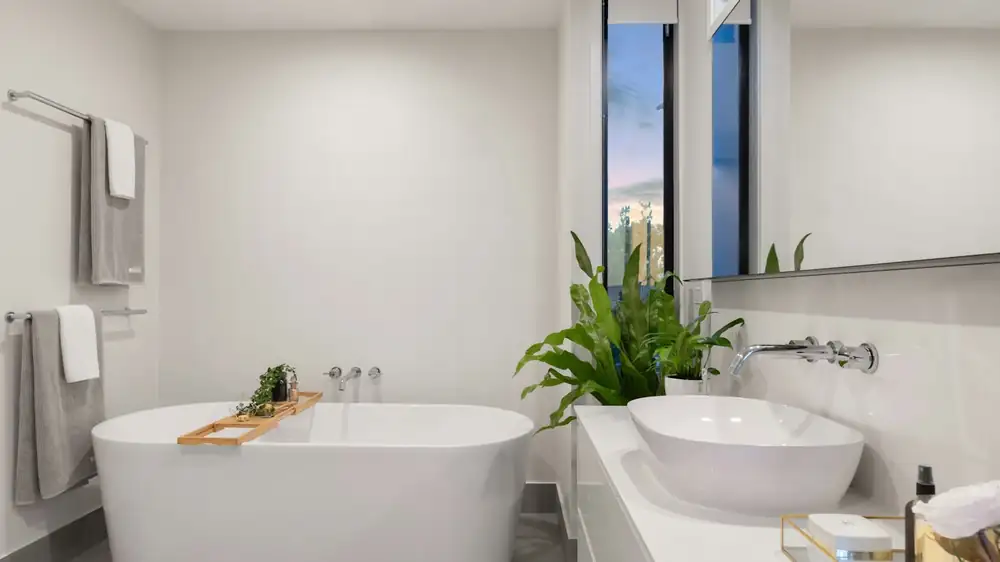
Above the counter and to one side is usually 20–30 cm of wall. A shallow shelf (10–12 cm deep) here holds the items that need to be visible but are used less often: a second bottle, a jar, a small plant.
Load limit: 2–3 kg. This is the one place an adhesive shelf is reliable, because the wall is usually smooth and the load is light.
Where it fails: if the wall is textured, or if the shelf is above the basin where steam reaches it. In that case use a shelf on brackets, fixed into the wall — but only if you are allowed to drill.
Above the toilet: the biggest single gain
The space above a toilet cistern is typically 50 cm wide, 30 cm deep, and 60 cm of usable height. That is 90 litres of volume that almost nobody uses.
Three options, in order of how much they hold:
| Option | Capacity | Cost | Wall damage |
|---|---|---|---|
| Over-toilet freestanding unit (3 shelves) | 25–35 items | $40–80 | None |
| Wall-mounted shelf above cistern | 10–15 items | $20–40 | Screws |
| Narrow cabinet on the floor beside the toilet | 15–20 items | $50–90 | None |
The freestanding unit wins because it holds the most and requires no fixing. Its only cost is floor area — but the area it occupies is the strip beside and behind the toilet, which is unusable for anything else.
Measure four things before buying one:
- Distance from the back wall to the front of the cistern
- Height of the cistern lid
- Width of the floor space at the toilet base
- Position of any soil pipe boxing
This is the most-returned bathroom product precisely because people buy it on sight without these four measurements.
Behind the door: the free wall
The back of a bathroom door is 1.5 m² of surface that is used for nothing.
What fits: an over-door hook rack (towels, robes, a laundry bag), or an over-door pocket organiser (small bottles, cleaning items, spare toilet rolls).
Load: 10–15 kg distributed for a hook rack; 3–5 kg for fabric pockets.
The check: door thickness (most racks fit 35–45 mm) and the gap above the door (need 4 mm). A rack that does not fit sits crooked and eventually splits the door edge.
In the shower: tension rod, not adhesive
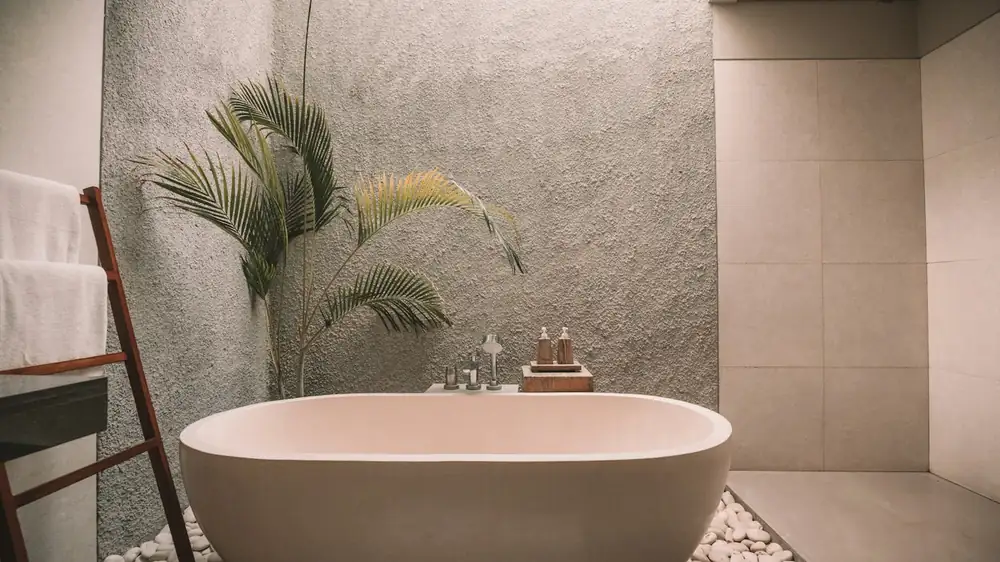
Shower storage is where adhesive products fail most reliably. Steam and constant wet-dry cycling defeat the glue within weeks.
The reliable option: a tension rod across the enclosure, with hanging baskets. Holds 5–10 kg, leaves two small scuff marks, repositions in seconds.
The alternative: a corner pole caddy standing on the shower floor and gripping the ceiling. Holds more (10–15 kg) but eats floor space, which in an 80 × 80 cm shower is a real cost.
What not to do: adhesive shelves in the shower. They will fall, and usually at an inconvenient hour.
The floor: keep it clear
In a 2 m² bathroom the floor is the working area. Anything on it — a laundry basket, a scale, a bin, a spare toilet roll holder — reduces the space you have to stand.
The test: can you stand at the basin with your feet flat and turn around without stepping over anything? If not, the floor has too much on it.
Where things go instead:
| Item | Usual place | Better place |
|---|---|---|
| Laundry basket | Floor | Hanging bag on the door, or in the bedroom |
| Spare toilet rolls | Floor stack | Over-toilet unit top shelf |
| Bin | Floor | Small bin hung on the cabinet door |
| Scale | Floor | Under the basin cabinet, or in the bedroom |
| Cleaning products | Floor | Under the sink in the kitchen, or a high shelf |
Half of what occupies a small bathroom floor does not need to be in the bathroom at all.
What the whole setup costs
| Item | Cost |
|---|---|
| Shallow shelf beside basin | $15–25 |
| Over-toilet freestanding unit | $40–80 |
| Over-door hook rack or organiser | $15–30 |
| Tension rod + 2 baskets | $15–25 |
| Total | $85–160 |
No drilling, everything removable, and enough capacity for a two-person household's daily and weekly items.
The honest capacity check
Add up what the four zones hold:
| Zone | Items |
|---|---|
| Counter (5 items) | 5 |
| Shallow shelf | 6–8 |
| Above toilet (3 shelves) | 25–35 |
| Behind door | 8–12 |
| In shower (tension rod) | 3–5 |
| Total | 47–65 |
A typical household has 40–60 bathroom items, of which 12 are daily. So the zones above cover it — provided the items used less than monthly move out of the room.
That last condition is the one people resist. A spare bottle of shampoo, a first aid kit, a hair mask used twice a year: these do not need to live in a 2 m² room. Moving them to a hall cupboard or a box under the bed is what makes the arithmetic work.
The five-minute weekly reset
A small bathroom drifts faster than any other room, because everything is visible from the doorway.
Once a week, five minutes:
- Clear the counter to the five items
- Wipe the surfaces
- Put back anything that has migrated to the floor
- Check the shower baskets are not overloaded
Five minutes weekly prevents the accumulation that makes a small bathroom feel unusable, and it is the difference between a setup that lasts and one that decays by week three.